Can You See Through Roller Shades at Night?
Sometimes, yes. Roller-shade privacy depends on the exact fabric, the balance of indoor and outdoor light, viewing angles, and gaps around the shade. A fabric that feels private on a bright afternoon may reveal movement or silhouettes when your lights are on after dark.
For dependable privacy, do not choose from a room photograph alone. Compare a physical fabric sample under the lighting conditions you actually use, then consider the coverage of the finished shade.
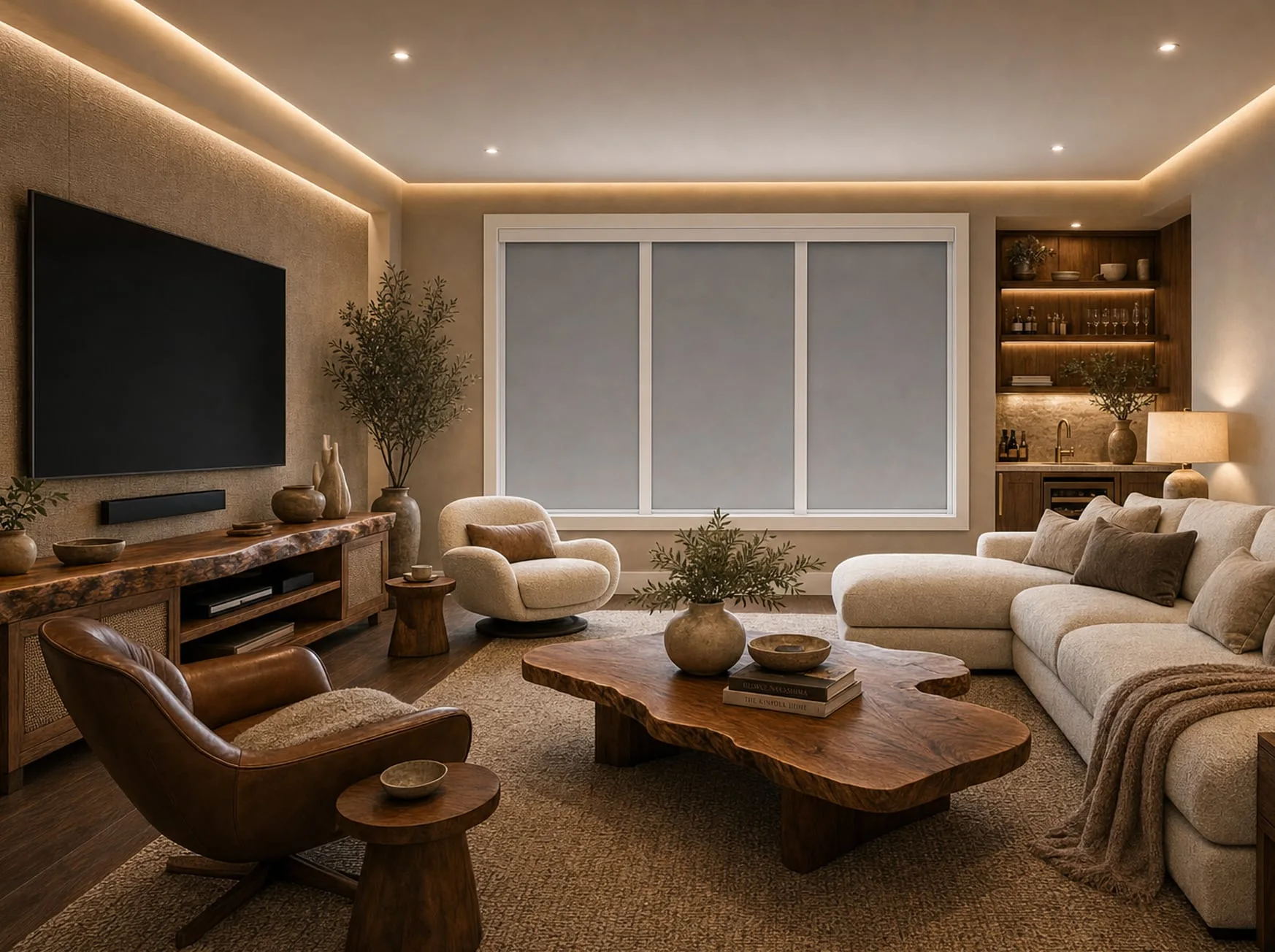
Why daytime privacy can change after sunset
During the day, a brighter outdoor scene can make it harder to see into a darker room. At night, a lit interior reverses that balance. An open weave does not become opaque simply because you can see outside during daylight.
Check the view from the sidewalk, a neighboring window, or another relevant angle—not only from inside the room. Fabric color and openness influence appearance, but neither alone guarantees privacy.
Compare the four fabric categories
Sheer roller shades soften the appearance of a window while retaining a more transparent fabric surface. They are not the first choice when preventing nighttime views is essential. Explore the Dazzle sheer collection for appearance and color, not a promise of opaque coverage.
Solar roller shades can balance daytime glare control with outward views. An openness percentage describes the weave; it is not a privacy rating. If you use the room after dark, compare an additional opaque treatment or a different fabric category. See the solar openness guide.
Light-filtering roller shades diffuse daylight and can obscure detail, but nighttime silhouettes and visibility vary by fabric and lighting. Do not assume that every light-filtering fabric is equally private. The Breeze collection separates light-filtering and room-darkening versions so you can compare the correct materials.
Room-darkening roller shades are generally the stronger starting point for privacy and reduced light transmission through the fabric. They do not guarantee blackout or eliminate views around uncovered edges. Compare Fiji room-darkening fabrics and plan the mount as carefully as the color.
Living rooms and street-facing windows
For a living room, write down two separate requirements: how much daylight or view you want during the day, and how private you need the room to be in the evening. A street-facing window may need a different solution from a window facing your enclosed yard.
If you prefer a sheer or solar shade during the day, consider layering it with a suitable opaque curtain for evening privacy. Confirm the mounting space and operating clearance for both treatments before ordering. A room-darkening roller may be a simpler option if nighttime privacy matters more than retaining the view.
Bedrooms and guest rooms
Bedroom privacy and bedroom darkness are related but different. A fabric can obscure the interior while light still enters around its edges. Start with the bedroom shade guide for sleep-focused planning, and check the actual fabric from outside with bedside lights on.
Guest rooms that double as offices need a daytime glare plan as well. Our home-office roller shade guide explains the tradeoffs without assuming that a solar fabric will provide nighttime privacy.
Mounting and edge coverage matter
An inside-mounted shade needs operating clearance, which can leave light gaps and sightlines at certain angles. An outside mount can provide additional overlap when the wall, trim, and hardware allow it, but it is not a guarantee of a sealed window.
Use the inside versus outside mount guide and measuring instructions. Do not invent a universal overlap or depth requirement: it depends on the selected product and mounting conditions.
Dual shades: separate daytime and nighttime priorities
Dual shades let you plan separately for daytime light and evening privacy. Budget for two individual shades plus the dual-shade assembly, rather than expecting a second fabric to be included with a standard roller.
For a street-facing living room or an office used after dark, ask whether a dual-shade configuration could pair a daytime-view fabric with a more opaque evening fabric. Dual shades are an inquiry-only option: we need to review the exact fabrics, mounting space, controls, and coverage for your window before ordering.
For a motorized dual roller, allow for a motor surcharge for each shade. When comparing this setup with a single roller and a separate curtain, request an itemized quote for the complete treatment so neither the second motor nor the curtain hardware is overlooked.
A practical sample check before ordering
1. Choose samples from the exact light-control version, not just a matching color name. 2. Hold the sample against the window with your normal evening lights on. 3. Have someone assess detail and silhouettes from outside at realistic angles. 4. Check for uncovered edges separately; a small sample cannot demonstrate full-window coverage. 5. If the result is uncertain, ask us about the specific fabric before ordering.
Order physical fabric samples, browse fabric collections, or start a room-darkening project.
Common questions
Are light-filtering roller shades private at night?
It depends on the exact fabric, viewing angle, and indoor lighting. Some fabrics obscure detail while still showing silhouettes. Check a sample after dark rather than relying on the light-filtering label alone.
Can solar shades provide one-way privacy at night?
Do not rely on solar fabric for one-way nighttime privacy. A bright interior can be visible through an open weave after sunset. Consider a more opaque fabric or an additional treatment.
Are room-darkening roller shades the same as blackout?
No. Room-darkening fabric reduces light transmission, but the finished treatment can still admit light around its edges. Privacy, fabric opacity, and complete room darkness are separate considerations.
What does a room-darkening fabric choice add to your privacy plan?
These room-darkening choices span three base-price levels. A higher price is not proof of stronger privacy; compare the actual fabric and coverage.
- Callie RD
- Callie RD
- Amelia RD / Francis RD / Fiji
- Amelia RD / Francis RD / Fiji
- Breeze RD
- Breeze RD
Pay for the privacy your window needs
A higher-priced collection does not promise stronger nighttime privacy. Compare the exact room-darkening samples with your lights on, and check sightlines around the shade. Budget separately for any second treatment needed for evening coverage, rather than assuming a fabric upgrade solves it.
For controls, finishes and delivered totals, use the roller shade cost guide. Order samples before pricing your final selection.
See the three-size comparison
| Size (in.) | Callie RD | Amelia RD / Francis RD / Fiji | Breeze RD |
|---|---|---|---|
| 36 × 60 | +0% | +11.0% | +29.8% |
| 48 × 72 | +0% | +11.4% | +34.1% |
| 72 × 72 | +0% | +11.9% | +33.6% |
| Sample average | +0% | +11.4% | +32.5% |
How to read this: Equally weighted 36 × 60, 48 × 72 and 72 × 72 inch cordless base shades. For each size, we calculate the percentage above Callie RD, then average those three percentages. RD means room darkening. Collections shown together share the same base pricing in these sizes. Excludes upgrades, tax, shipping and promotions. These are sample-based averages, not market averages, a light-control rating or a live quote. No solar fabrics are included.
Shop with evening privacy in mind
Separate your daytime light preference from the privacy you need after dark.
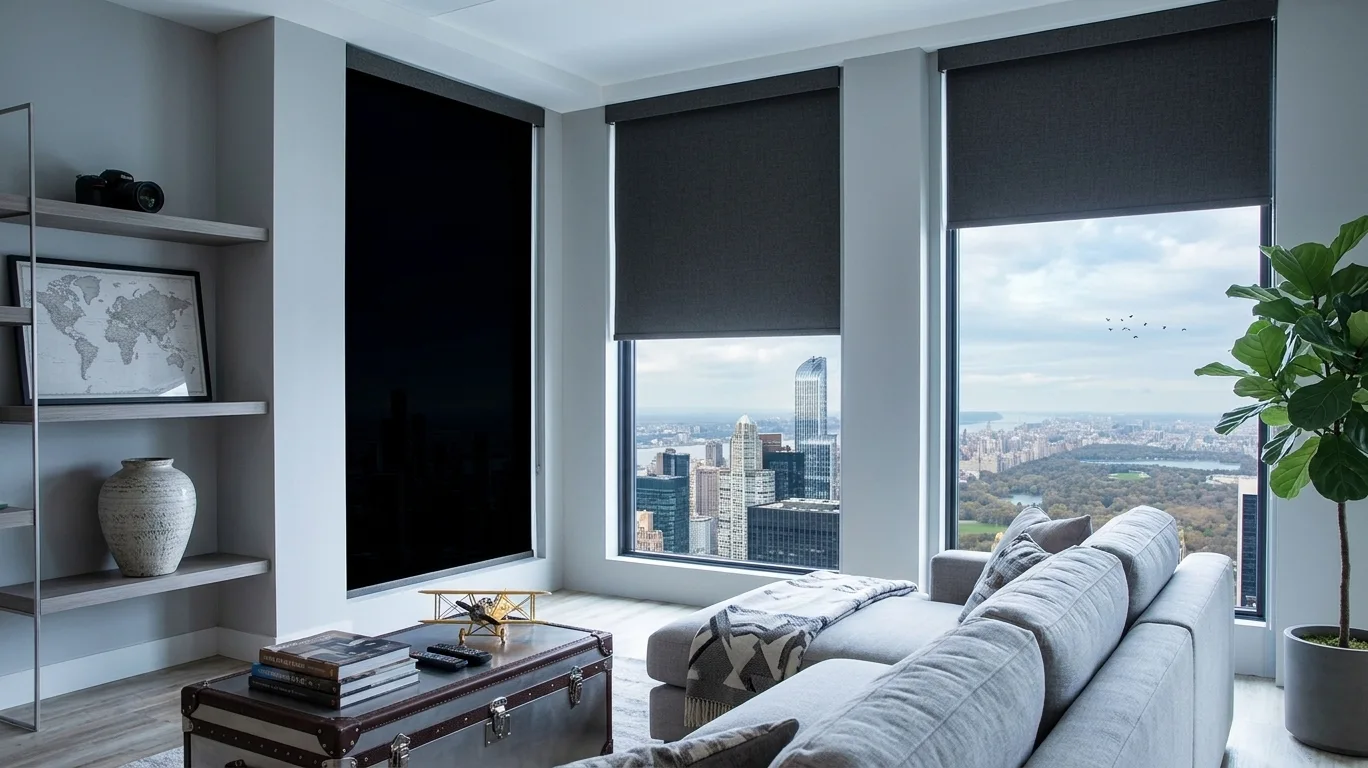
Start a room-darkening plan
Consider fabric opacity and coverage together for windows where evening privacy matters.
Plan room-darkening shades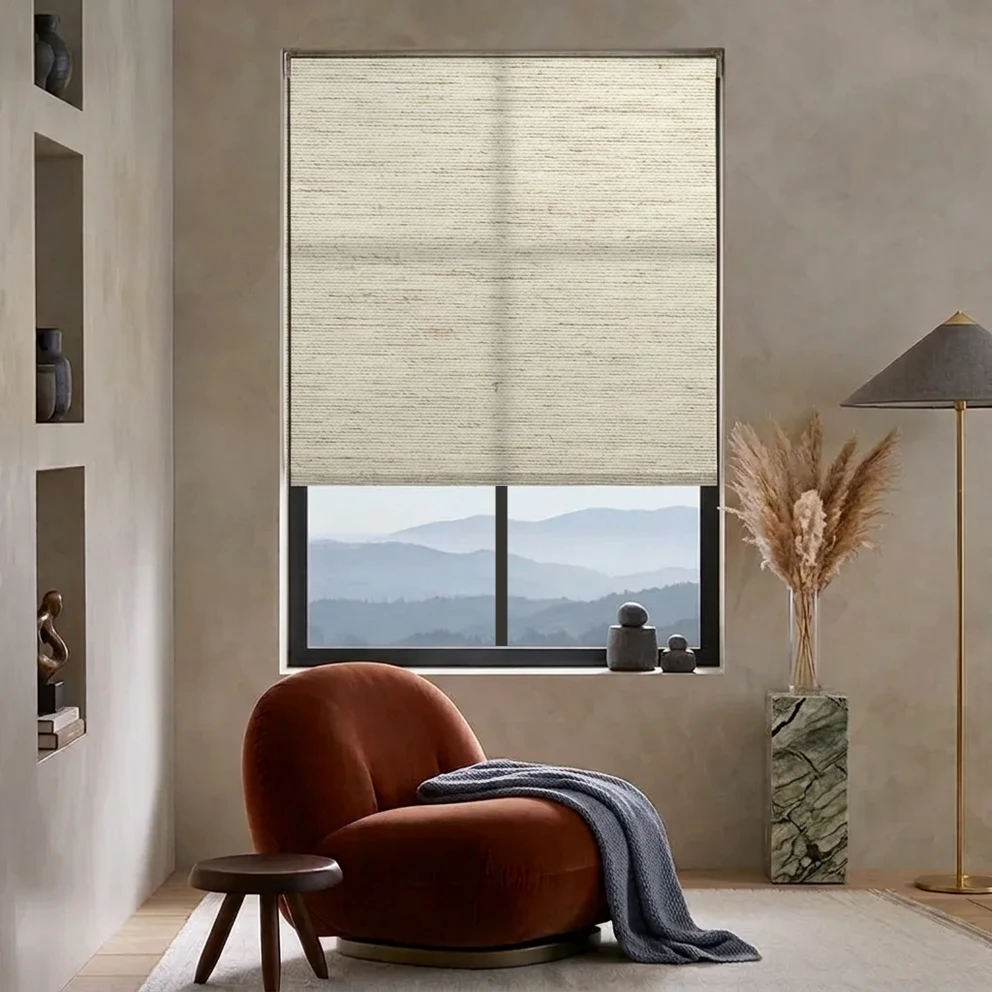
Compare daytime light filtering
Explore the daytime alternative, without treating light-filtering fabric as a nighttime privacy guarantee.
Review light-filtering fabrics